
Is that large tree in your yard healthy, struggling, or becoming a potential hazard? For homeowners throughout Sheboygan County, Wisconsin, knowing the difference can help prevent costly property damage and unexpected tree emergencies.
Wisconsin trees endure a lot throughout the year. From freezing winter temperatures and heavy snowfall to spring storms, strong winds, and periods of summer drought, changing weather conditions can take a toll on even the most established trees.
Unfortunately, a declining tree doesn’t always look dangerous at first glance. Some trees show obvious signs of trouble, while others may appear relatively healthy despite having weakened branches, internal decay, or root problems.
At Clean Edge Tree Service, we encourage homeowners in Sheboygan, Plymouth, Sheboygan Falls, Kohler, Howards Grove, and surrounding communities to pay attention to changes in their trees before those problems become more serious.
Here are seven warning signs worth watching for.
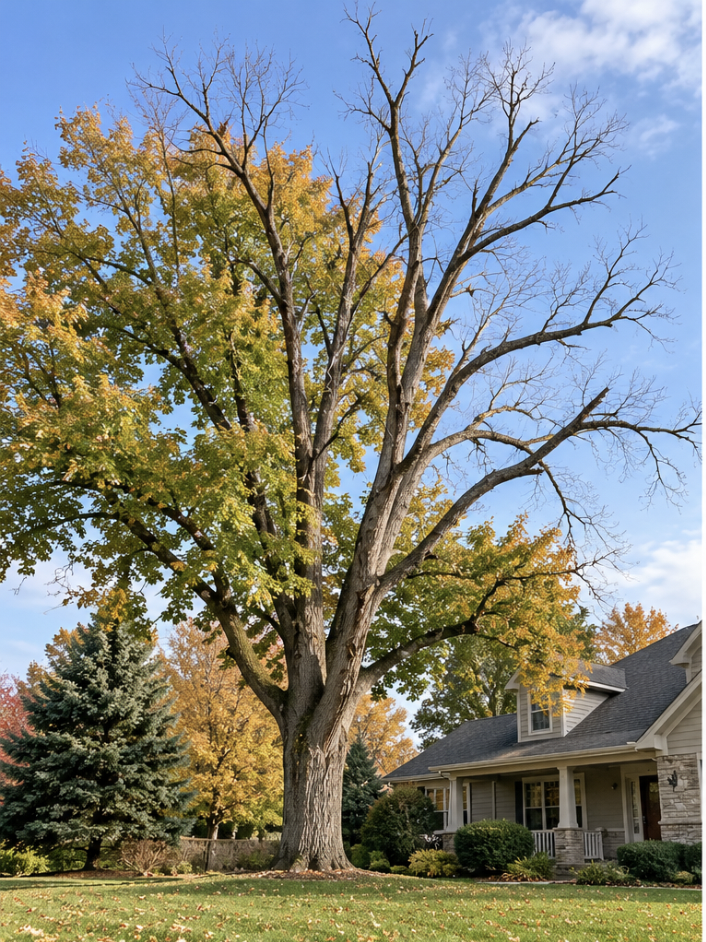
1. Your Tree Has Few or No Leaves During the Growing Season
One of the most noticeable signs of a struggling tree is a lack of healthy foliage.
If neighboring trees of the same species are full of green leaves during spring and summer, but yours has bare branches, unusually sparse foliage, or leaves that turn brown and drop prematurely, something may be wrong.
Other warning signs include:
- Branches that fail to produce new growth in spring
- Leaves that are noticeably smaller than normal
- Sections of the canopy that remain bare while the rest of the tree looks healthy
- Premature leaf drop or unusual discoloration
A Wisconsin-specific reminder: Deciduous trees such as maples, oaks, and birches naturally lose their leaves in fall. A bare tree in November or January isn’t necessarily unhealthy. The more important concern is whether the tree produces healthy foliage when the growing season returns.
If a tree consistently struggles to leaf out or has large sections of dead canopy, a professional evaluation can help determine whether pruning, treatment, or removal is appropriate.al evaluation can help determine whether pruning, treatment, or removal is appropriate.
2. The Bark Is Peeling, Cracking, or Falling Away
A tree’s bark acts as a protective outer layer, helping shield the living tissue beneath it from injury, pests, and environmental stress.
Some bark shedding is completely normal, depending on the tree species. However, certain changes deserve a closer look.
Watch for:
- Large sections of bark falling away unexpectedly
- Deep cracks or splits extending into the trunk
- Exposed wood beneath damaged bark
- Sunken or discolored areas along the trunk
- Areas where bark has separated from the underlying wood
Wisconsin’s fluctuating winter temperatures can contribute to frost cracks and other bark injuries, particularly on susceptible trees.
Not every crack means a tree is dying, but significant trunk damage can leave a tree more vulnerable to decay and structural weakness.
If you notice extensive bark loss or deep cracks, especially on a large tree near your home, it’s wise to have the tree assessed.
3. Dead, Brittle, or Broken Branches Are Becoming Common
Finding an occasional small branch in your yard isn’t unusual, particularly after windy weather.
However, repeatedly discovering large branches on the ground or noticing multiple dead limbs throughout a tree’s canopy can indicate a more serious problem.
Dead branches often become dry and brittle, making them more likely to break under additional weight or stress.
This is especially important in Sheboygan County as winter approaches.
Heavy, wet snow, ice accumulation, and strong winds can place additional strain on weakened limbs. A branch that appears stable on a calm autumn afternoon may not withstand severe winter conditions.
Pay particular attention to dead or overgrown branches hanging above:
- Your home’s roof or garage
- Driveways and parked vehicles
- Sidewalks and walkways
- Outdoor gathering areas
- Fences and neighboring properties
Professional deadwood removal and selective pruning may reduce certain risks without requiring removal of the entire tree.
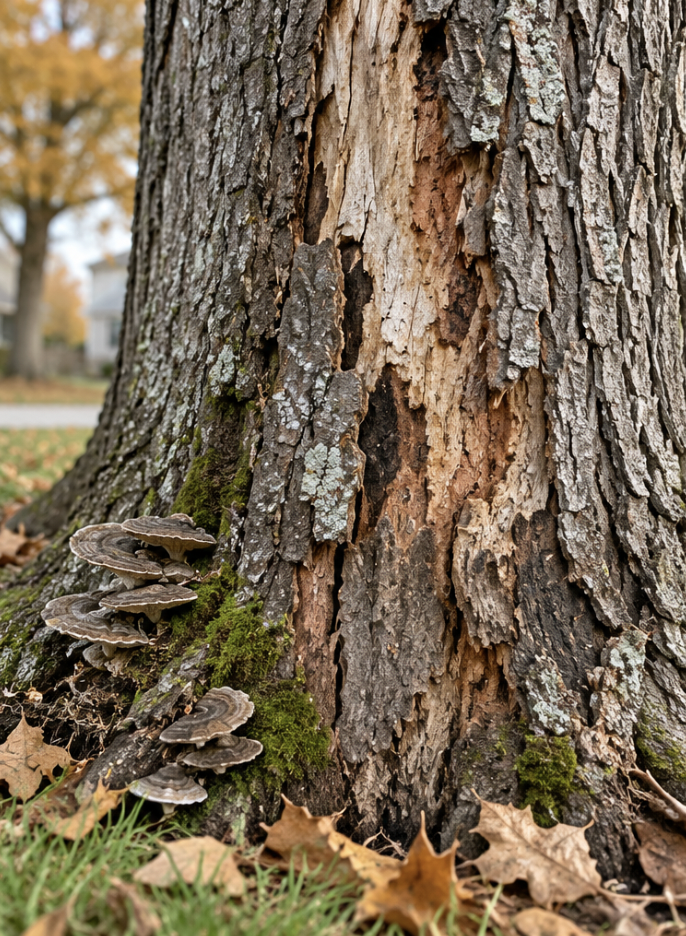
4. Mushrooms, Fungal Growth, or Wood Decay Appear Around the Trunk
Mushrooms growing in your lawn aren’t automatically a problem. But fungal growth directly on a tree’s trunk, exposed roots, or root flare may indicate decaying wood.
Some fungi feed on dead or weakened wood, and certain types can be associated with internal decay or root deterioration.
Potential warning signs include:
- Shelf-like fungal growths attached to the trunk
- Mushrooms repeatedly appearing around the tree’s base
- Soft, crumbling, or hollow areas of wood
- Cavities or openings in the trunk
- Decaying wood around major roots
The concern is not simply whether the tree is alive. A tree can continue producing leaves while portions of its trunk or root system are structurally compromised.
Because decay isn’t always visible from the outside, a professional tree assessment can be especially valuable when large trees stand close to homes or other structures.
5. Insect Activity Is Accompanied by Visible Tree Damage
Trees naturally support many insects, and seeing ants, beetles, or other insects around a tree doesn’t automatically mean the tree is dying.
However, unusual insect activity combined with declining foliage, damaged bark, or dying branches may point to an underlying problem.
Wisconsin homeowners should be particularly mindful of pests and diseases that affect common local tree species.
For example, emerald ash borer has caused extensive damage to ash trees throughout Wisconsin. Infested trees may develop thinning crowns, bark damage, and progressive branch dieback.
Other insects may take advantage of trees that are already weakened by drought, disease, or physical injury.
Signs worth investigating include small exit holes in the bark, unusual woodpecker activity, canopy thinning, and branches that die back over time.
If you suspect insect damage, identifying the tree species and the actual cause of decline is important before deciding what action to take.
6. Your Tree Has Developed a New or Increasing Lean
Not every leaning tree is dangerous.
Some trees naturally grow at an angle because of sunlight, competition with nearby trees, or conditions present when they were young.
What deserves immediate attention is a tree that suddenly begins leaning or appears to be leaning more than it did previously.
Potential warning signs include:
- A noticeable change in the tree’s angle
- Soil lifting or cracking near the roots
- Exposed or damaged roots
- A new lean following a storm
- Movement at the base of the tree
A sudden lean can indicate root failure or another serious structural problem.
When a large tree is leaning toward a home, garage, road, or neighboring property, the consequences of a failure can be significant.
If a tree has shifted suddenly or appears unstable, keep people and vehicles away from the area and contact a qualified tree professional promptly.
7. Large Sections of the Canopy Are Dying Back
Sometimes a tree doesn’t decline all at once.
You may notice that one side of a maple has fewer leaves, the upper branches of an ash tree are dying, or several large limbs no longer produce healthy growth.
This condition is often called crown dieback.
Possible causes include root damage, disease, insect infestations, drought stress, soil problems, and other environmental factors.
In some situations, selective pruning and appropriate care may help preserve the tree. In others, widespread decline may indicate that removal is the safer long-term option.
The key is recognizing the problem early enough to evaluate your choices.
Why Dead and Dying Trees Are a Bigger Concern Before Wisconsin Winter
Wisconsin winters bring challenges that homeowners in warmer climates don’t face as frequently.
Heavy snowfall, ice, freezing temperatures, and winter windstorms can increase the load on branches and expose existing structural weaknesses.
A dead limb over your driveway might not seem urgent in October, but additional snow or ice could increase the likelihood of that limb breaking.
Likewise, a large dead tree standing near your house may become more difficult to address once snow accumulates and winter conditions limit access to the property.
That’s why fall is a practical time to inspect your trees, identify potential hazards, and schedule necessary work before winter weather becomes a factor.
Addressing tree problems early may help prevent emergency situations later.
Does a Dying Tree Always Need to Be Removed?
Not necessarily!
One of the biggest misconceptions about tree care is that a struggling tree automatically needs to come down.
Depending on the tree’s condition, location, and the cause of its decline, professional trimming, deadwood removal, or other corrective care may be appropriate.
However, removal may be recommended when a tree is dead, severely decayed, structurally unstable, or presents an unacceptable risk to nearby people or property.
The right decision depends on the individual tree.
At Clean Edge Tree Service, we believe homeowners should understand their options before moving forward with major tree work.
Professional Tree Trimming and Dangerous Tree Removal in Sheboygan County
When a large tree becomes a concern, experience and careful planning matter.
At Clean Edge Tree Service, we provide professional tree trimming, pruning, deadwood removal, and large or hazardous tree removal services for homeowners throughout Sheboygan County and surrounding Wisconsin communities.
Whether you need overgrown branches trimmed away from your home, dead limbs removed before winter, or a large declining tree taken down, our goal is to complete the work safely, efficiently, and with respect for your property.
We understand that removing a mature tree is a significant decision. That’s why we encourage homeowners to address concerns early rather than waiting until a damaged tree becomes an emergency.
Schedule Your FREE Tree Service Estimate Before Winter Arrives!
Is there a tree on your property that doesn’t look quite right?
Maybe you’ve noticed dead branches, a growing lean, damaged bark, or a large tree that has been declining for several seasons.
Don’t ignore the warning signs.
Clean Edge Tree Service proudly serves Sheboygan, Sheboygan Falls, Plymouth, Kohler, Howards Grove, and surrounding Sheboygan County communities.
🌳 Contact Clean Edge Tree Service today to request your FREE estimate for tree trimming, deadwood removal, or hazardous tree removal.
Let us help you address your tree concerns before Wisconsin’s winter weather arrives!